
Trans PRK No Touch EPI-LASIK Eye Surgery
At Eagle Eye Centre, Trans PRK (frequently called No Touch EPI-LASIK) provides a highly secure and successful way to correct your sight without creating any cut flaps or using physical blades.

Trans PRK No Touch EPI-LASIK Eye Surgery
At Eagle Eye Centre, Trans PRK (frequently called No Touch EPI-LASIK) provides a highly secure and successful way to correct your sight without creating any cut flaps or using physical blades. Utilizing advanced laser technology, this method gently fixes the shape of your eye window without any solid tools ever touching your eyeball. It is an ideal option for individuals with naturally thin eye surfaces, those who play intense sports, or anyone wanting to completely avoid flap-related complications.
What Is Trans PRK (No Touch EPI-LASIK)?
TransPRK, also known at Eagle Eye Centre as No Touch EPI-LASIK, is a bladeless and flap-free laser vision correction procedure performed using an excimer laser. Unlike LASIK, it does not involve creating a corneal flap or mechanically removing the corneal epithelium.
At Eagle Eye Centre, TransPRK in Malaysia is performed using the WaveLight Allegretto Wave Eye-Q excimer laser platform. In a single treatment sequence, the laser removes the epithelium, which is the cornea’s outermost layer, before reshaping the underlying corneal tissue to correct refractive errors. This reduces manual contact with the corneal surface and provides a flap-free vision correction option for suitable patients.
Quick facts about Trans PRK
Technology used
Wavelight Allegretto Wave Eye-Q (Excimer laser)
Procedure type
No flap, no blade, all-laser surface ablation
Touch-free
No physical instruments contact the cornea
Ideal for
Thin corneas, active lifestyles, contact sports, and flap-related complication risks
Recovery time
Functional vision typically within 1–3 weeks
Discomfort duration
1–2 days post-procedure
Post-surgery care
Temporary bandage contact lens and follow-up reviews
What vision problems can Trans PRK correct?
Trans PRK is a highly effective laser treatment that fixes a wide variety of everyday focus issues by carefully smoothing the shape of your eye surface. It is often the perfect alternative for patients who were told they do not qualify for traditional LASIK due to thin eyes.

Myopia (short-sightedness) Typically up to -10.00 dioptres
Characterized by clear near vision but blurred distant focus. Trans PRK delicately recalibrates your corneal curvature, ensuring light converges perfectly onto the retina to restore crisp, high-definition distance clarity.

Hyperopia (long-sightedness) Up to +6.00 dioptres
Characterized by blurred near vision while distant objects remain relatively clear. Trans PRK delicately re-contours and subtly steepens the cornea, ensuring light focuses accurately onto the retina to restore sharp, effortless near-field clarity.

Astigmatism
Characterized by an irregular corneal curvature that causes blurred, stretched, or distorted vision across all distances. Trans PRK meticulously smooths and refines the corneal surface, neutralizing this asymmetry to deliver consistently crisp, distortion-free visual stability.
Treatment Comparison Guide
Procedure
- Bladeless LASIK
- Zeiss SMILE
- Epi-LASIK
- Trans PRK / No Touch EPI-LASIK
Technology Used
- Flap technique
- Lenticule technique
- Surface laser technique
- Surface excimer laser (No touch)
Best for
- Most refractive errors
- Most refractive errors, Active lifestyles, contact sports
- Patients with thin corneas, Active lifestyles, contact sports
- Active lifestyles, contact sports, thin corneas
Recovery Time
- 1 to 2 days
- 1 to 2 days
- 5 days to 3 months
- 5 days to 3 months
Treatment Process
-
Step 1
Pre-Refractive Assessment - Eye scans, evaluation, consultation.
-
Step 2
Surgery Day - Eye preparation, laser correction.
-
Step 3
Recovery - Brief rest, medication provided.
-
Step 4
Follow-Up Care - Reviews on Day 1, Week 1, Month 1, and as advised.

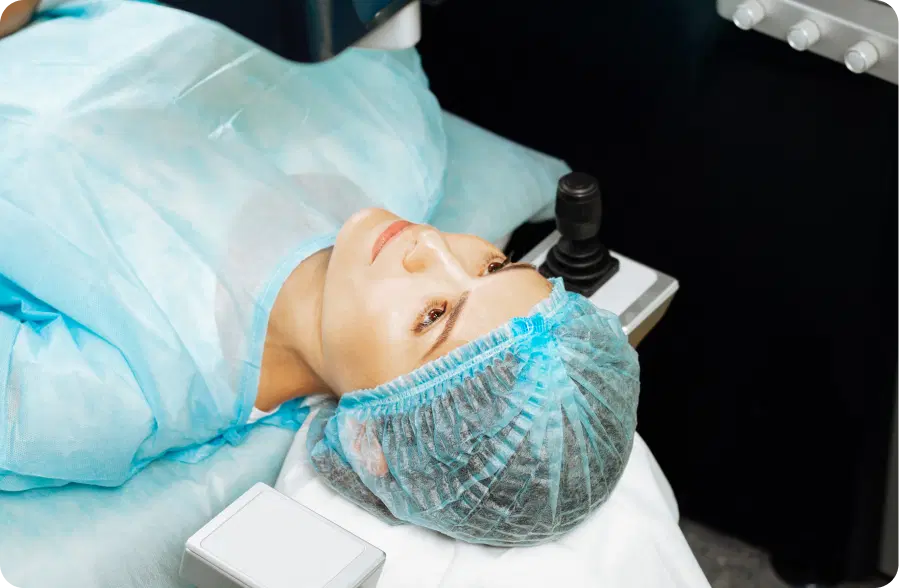



Am I a candidate for Trans PRK
Your precise suitability will be determined through a rigorous, high-definition pre-operative consultation, featuring advanced corneal mapping. Trans PRK is frequently our ultimate recommendation if you match any of the following profiles:
- Unique Corneal Profiles: You possess naturally thin or uniquely contoured corneas that make standard LASIK less than ideal.
- High-Impact Lifestyles: You are an athlete, military professional, or first responder requiring a resilient, zero-flap-risk solution for intense physical activities.
- Anatomical Nuances: You have specific features, such as deep-set or smaller eyes, where a surface-level, instrument-free approach is therapeutically superior.
- Ultimate Peace of Mind: You simply prefer the absolute security of a 100% flapless and blade-free vision correction experience.
- Specialized Therapeutic Needs: You require a visual enhancement following previous eye surgeries, or need concurrent treatments like Corneal Cross-Linking (CXL).
Recovery & aftercare
As a highly specialized surface treatment, your optimal visual clarity will naturally evolve over a period of up to 3 months. To ensure a flawless outcome, simply adhere to your bespoke aftercare regimen, including your prescribed medicated eye drops and all scheduled clinical reviews.

Days 1 to 5 Post-Surgery
As the surface naturally regenerates, expect temporary blurriness, mild light sensitivity, and tearing. Faint halos around lights are a completely normal part of this early healing process.
1 Week Post-Surgery
Your vision steadily begins to sharpen. You may safely and comfortably resume light daily routines, though slight visual fluctuations are still entirely normal.
1 Month Post-Surgery
Early healing sensations, such as transient dryness or glare, significantly subside. Your vision becomes increasingly stable, making daily activities feel effortless.
3 Months Post-Surgery
The final milestone. Most patients achieve their pristine, targeted visual outcome, with early dryness and night halos typically completely resolved.
Frequently asked questions
Have questions about eye health? Our team can help you understand your condition and treatment options.
- Yes. Trans PRK is commonly performed on both eyes during the same session when clinically appropriate.
- Treating both eyes together allows them to recover at the same time and may reduce temporary visual imbalance.
- In some cases, your ophthalmologist may recommend treating each eye separately based on your eye health and individual needs.
- Trans PRK may be suitable for selected patients with thinner corneas who are not suitable for LASIK.
- It may also be considered for people with active lifestyles, those who participate in contact sports or those who work in environments with a higher risk of eye trauma.
- A comprehensive assessment will evaluate your prescription stability, corneal thickness and shape, lifestyle and overall eye health.
- Your ophthalmologist will explain whether Trans PRK, LASIK, SMILE or an implantable contact lens is the most appropriate option for you.
- Recovery after Trans PRK generally takes longer than after LASIK.
- LASIK patients often notice clearer vision within one to two days, while the corneal surface after Trans PRK usually takes around five to seven days to heal.
- Functional vision may continue to improve over one to three weeks.
- Vision can fluctuate during recovery, and complete stabilisation may take longer depending on individual healing.
- The procedure itself is typically not painful because numbing eye drops are applied beforehand.
- Mild to moderate scratchiness, tearing or light sensitivity may occur during the first one to three days.
- Prescribed eye drops, pain relief medication and a temporary bandage contact lens may help keep you comfortable while the cornea heals.
- Temporary side effects may include dry eyes, blurred or fluctuating vision, light sensitivity, glare and halos around lights.
- These symptoms usually improve gradually as the eyes heal, although recovery varies between patients.
- Serious complications are uncommon but can still occur.
- Comprehensive screening and follow-up appointments help identify and manage potential risks. Your ophthalmologist will explain these risks before treatment.
- Laser vision correction is generally postponed during pregnancy and breastfeeding.
- Hormonal changes may temporarily affect the shape of the cornea and the stability of your prescription.
- After childbirth, the appropriate timing depends on whether you are breastfeeding and whether your vision has returned to a stable baseline.
- Your ophthalmologist will advise when it is suitable to undergo an assessment and treatment.
- Light exercise may usually be resumed after five to seven days, depending on your recovery.
- Swimming and water sports should be avoided for at least two weeks.
- Contact sports and strenuous physical activities should generally be avoided for at least one month or until your ophthalmologist confirms that it is safe.
- Air travel may be possible after approximately five days, but you should obtain your doctor’s approval and ensure that required follow-up appointments are not missed.
WHAT YOU SEE MATTERS
Schedule an eye check up
If you are looking into laser treatment to fix your vision, our friendly team at Eagle Eye Centre is here to guide you. Our experienced eye specialists will take you through a comprehensive consultation to test your eligibility and clearly explain your best treatment options. If Trans PRK is not the perfect fit for your eyes, we will suggest a safe and proven alternative tailored to your specific vision needs.
At Eagle Eye Centre, our doctors are fully committed to providing top-quality care focused on safety, precision, and your personal comfort. With decades of clinical experience, our medical team is fully equipped to handle both straightforward and complex eye conditions, ensuring you receive personalized and holistic care.
